

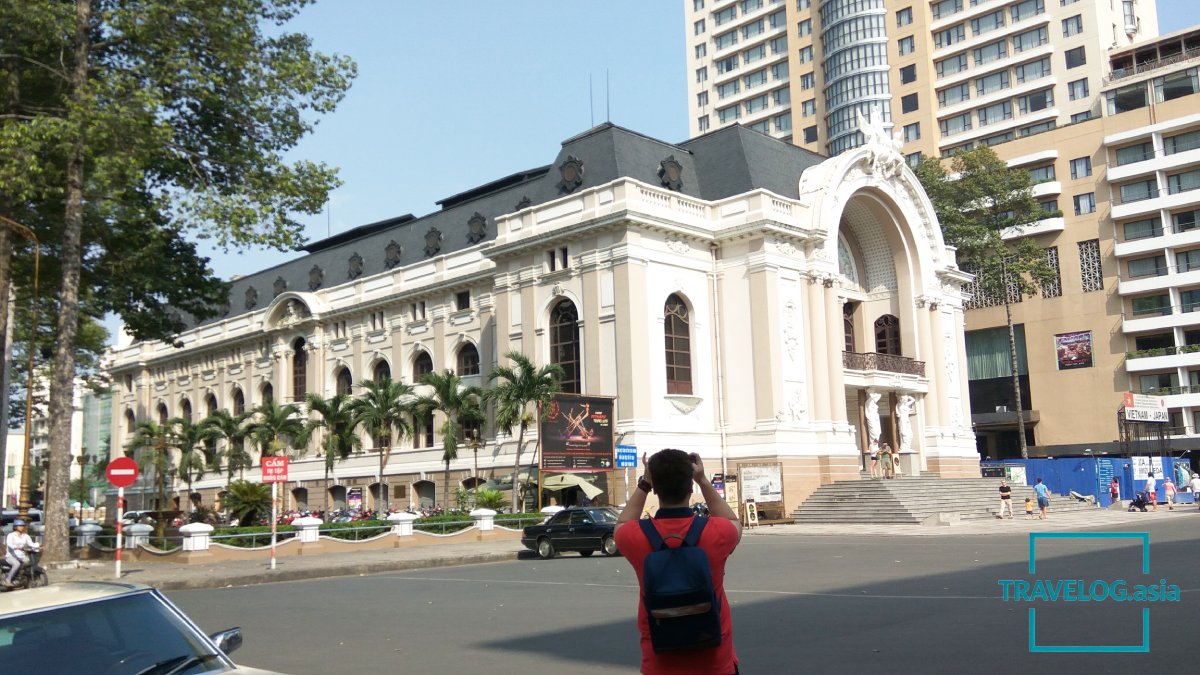
Standing proudly in the heart of Ho Chi Minh City, the Saigon Opera House—also known as the Municipal Theater—is one of the city’s most iconic architectural landmarks. Equally captivating by day and night, this elegant structure reflects the grandeur of colonial-era design blended with vibrant modern city life.
Constructed in 1898, the Opera House was designed by French architect Eugene Ferret during the period of French colonial rule. The building showcases the “flamboyant” architectural style of the French Third Republic, characterized by ornate detailing and dramatic visual elements.
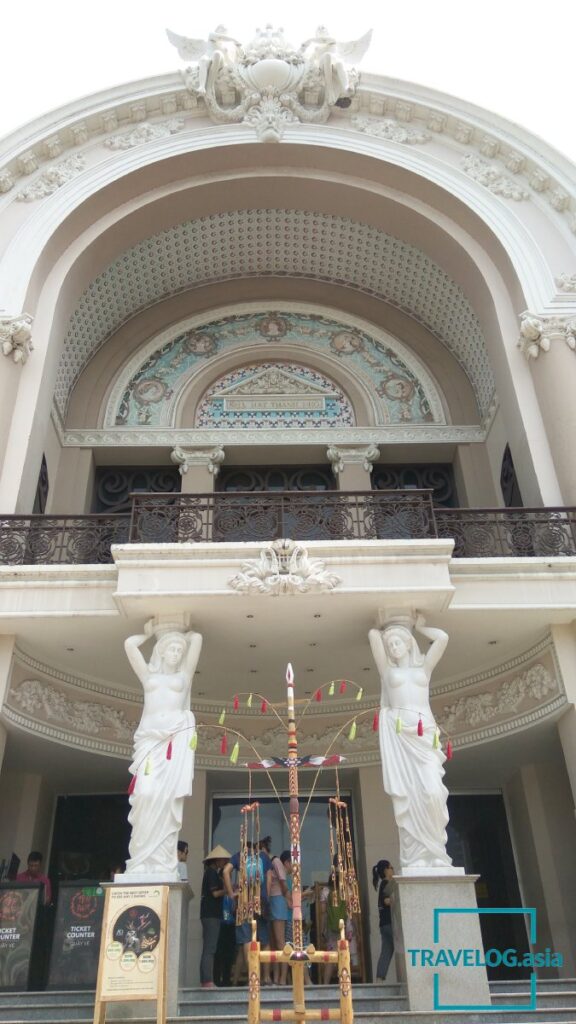
To ensure optimal acoustic conditions, the structure was uniquely elevated two meters above street level and designed with dual-layered doors to minimize external noise—an advanced feature for its time.
Positioned along one of the city’s main central axes, the Opera House enjoys a prime location linking key urban landmarks, including the metro system and the roundabout near Ben Thanh Market. From afar, the building resembles a grand gateway to the city.
Its exterior is richly decorated with intricate stone carvings and statues, while the interior exudes elegance with crystal chandeliers and polished granite flooring—materials that were originally imported from France.
The auditorium, designed in a graceful oval shape, accommodates up to 468 guests. It is carefully engineered to enhance both acoustics and visibility, offering an echo-free and soundproof environment ideal for world-class performances.
Today, the Saigon Opera House serves as a premier venue for high-profile events, cultural performances, and entertainment showcases in the city. Recognized for its historical and architectural value, it was officially designated as a national relic in 2012.
